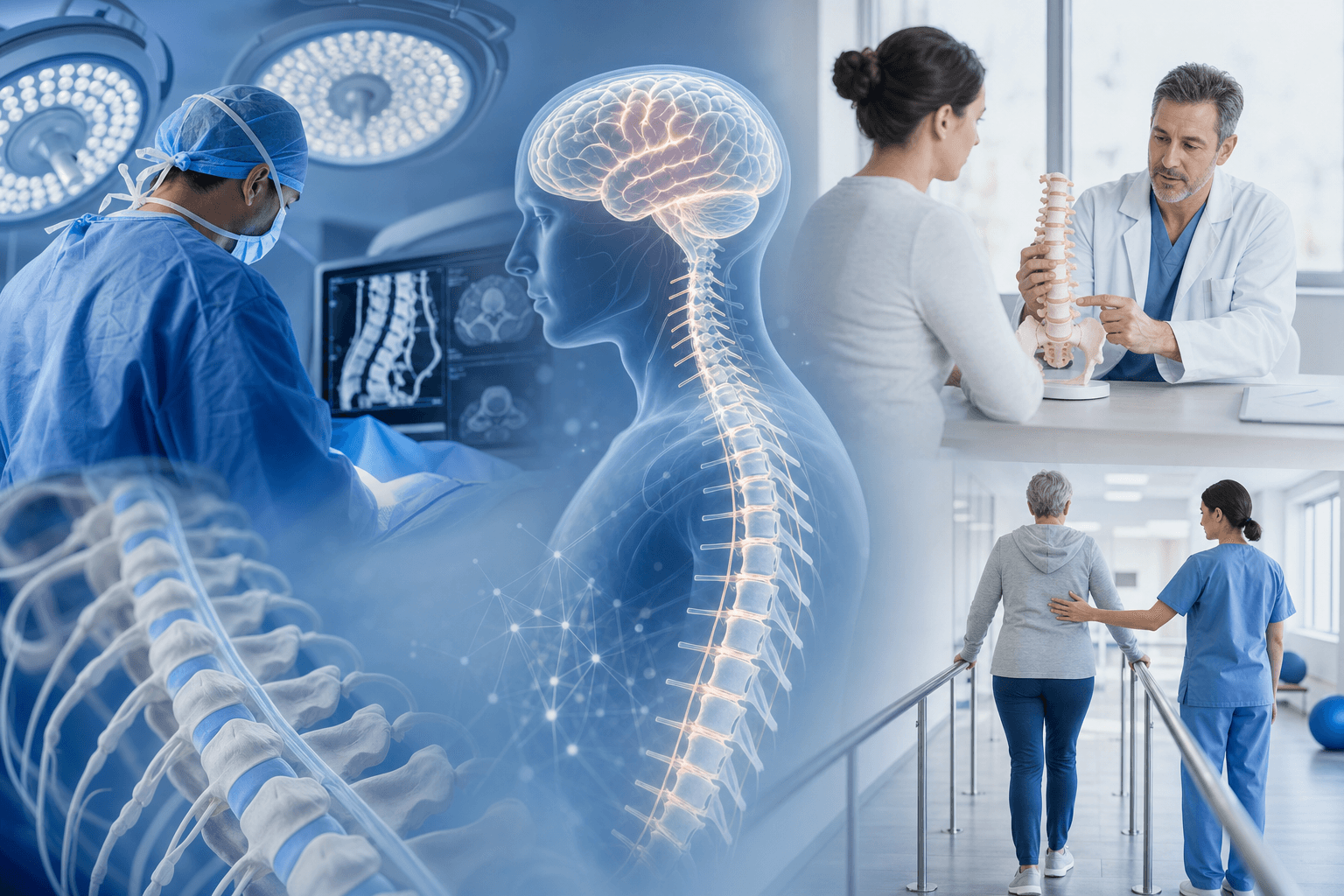
Minimally Invasive Neurosurgery: What It Means for You
15 June 2026 · By Neurosurgery.mu · Updated 17 June 2026
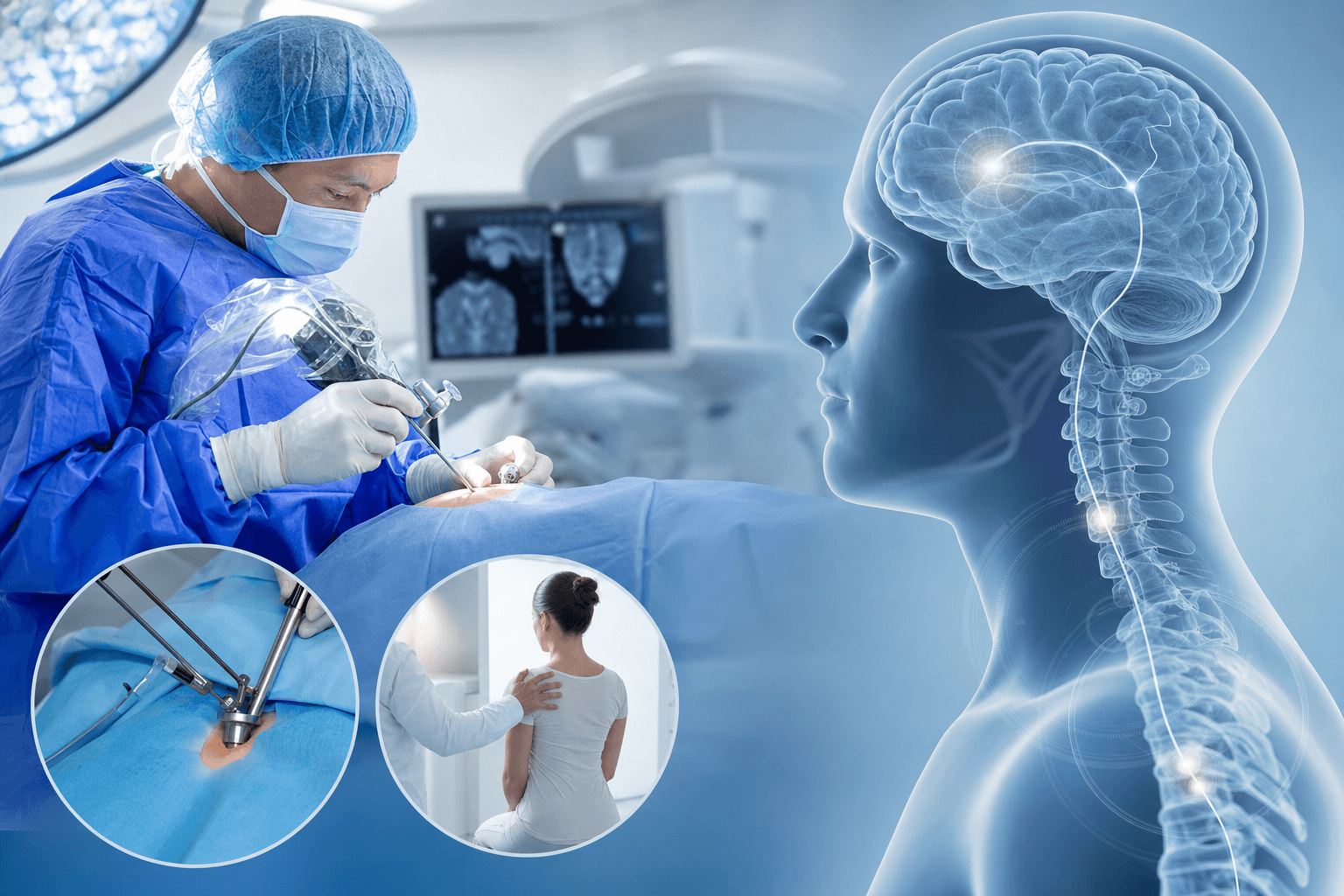
When people hear the word neurosurgery, they often picture long operations, large scars and difficult recoveries. Modern neurosurgery looks very different. Over the past few decades, surgery on the brain and spine has become far more precise, gentler on the body and easier to recover from. Understanding what minimally invasive and modern neurosurgery actually means can help you feel calmer and more informed if you or a loved one is facing a possible operation.
What modern neurosurgery means
Neurosurgery is the medical specialty that treats conditions of the brain, spine and nerves. This includes problems such as herniated discs, spinal stenosis (narrowing of the spinal canal), brain tumours, trapped nerves, aneurysms and conditions that cause pressure inside the head.
The word modern refers to the tools and techniques surgeons now use. Instead of relying only on large openings, surgeons today use high-powered microscopes, tiny cameras called endoscopes, image guidance (a kind of GPS for the body) and very fine instruments. Minimally invasive simply means achieving the same goal through smaller openings, with less disturbance to healthy muscle, bone and tissue. The aim is the same as traditional surgery, to treat the problem safely, but the path to get there is gentler.
Common symptoms that lead people to a neurosurgeon
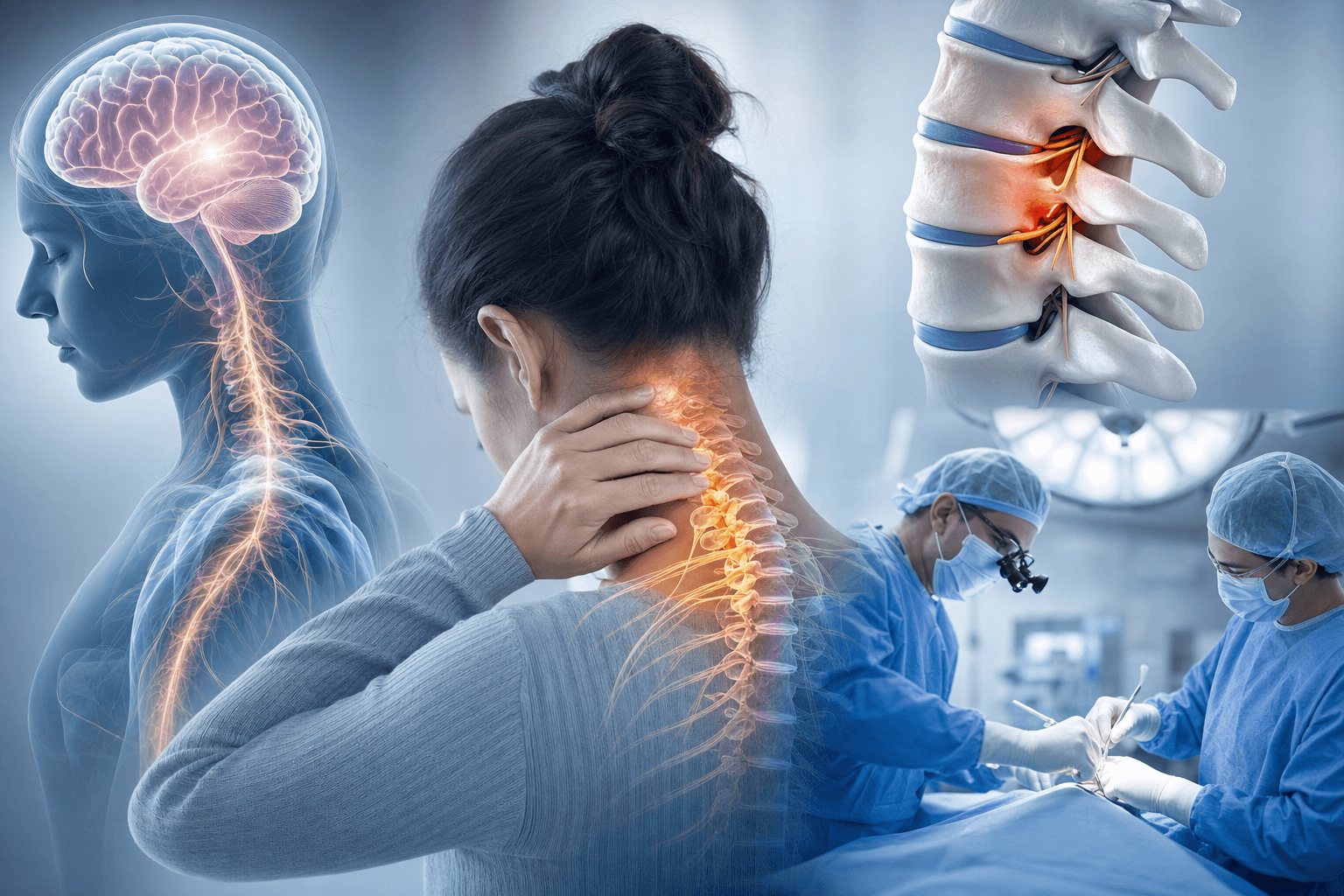
People are usually referred to a neurosurgeon because of symptoms that do not settle with simple measures. For spine conditions, these often include back or neck pain that travels into an arm or leg, numbness, pins and needles, or weakness in a limb. For brain conditions, warning signs can include persistent headaches that are new or changing, unexplained nausea, problems with vision, balance or speech, seizures, or weakness on one side of the body.
Most of these symptoms have causes that are not dangerous, and many improve on their own. They are simply a signal that something deserves a closer look.
How conditions are diagnosed
Diagnosis begins with a conversation. Your doctor will ask about your symptoms, how they started and how they affect daily life. A physical examination follows, checking reflexes, muscle strength, sensation and balance.
Imaging is the next step when needed. An MRI scan gives detailed pictures of soft tissues such as the brain, spinal cord, nerves and discs. A CT scan shows bone clearly and is useful in emergencies. In some cases, nerve tests or blood tests add more information. These tests are painless or involve only minor discomfort, and they help your surgeon understand exactly what is happening before any decision about treatment is made.
The range of treatment options
It is important to know that surgery is not always the first answer. Many neurological and spinal conditions are managed without an operation. Conservative (non-surgical) treatment may include rest, physiotherapy, targeted exercises, pain-relieving medication, posture and lifestyle adjustments, or guided injections. For many people, these measures are enough to bring lasting relief, and a good surgeon will always consider them first when appropriate.
When surgery is recommended, modern techniques offer real advantages. Minimally invasive spine surgery, for example, can often be done through openings of just a few centimetres. This usually means less blood loss, less pain afterwards, a shorter hospital stay and a quicker return to normal activities. In brain surgery, image guidance and keyhole approaches allow surgeons to reach deep areas with great accuracy while protecting healthy tissue around them.
Not every condition suits a minimally invasive approach, and traditional open surgery remains the safest and best choice in certain situations. Your surgeon will recommend the method that gives you the best result, not simply the smallest scar. The goal is always your safety and a good long-term outcome.
This article is general education and is not a substitute for personalised advice from your own doctor, who knows your full medical history.
When to see a specialist
It is sensible to seek medical advice if pain, numbness or weakness lasts more than a few weeks despite simple treatment, or if symptoms are getting steadily worse. Some signs need urgent attention. These include sudden severe weakness in a limb, loss of bladder or bowel control, a sudden very intense headache unlike any before, or new difficulty with speech, vision or balance. If any of these occur, seek emergency care straight away.
Seeing a neurosurgeon does not automatically mean you will need an operation. Often the visit simply gives you a clear diagnosis, reassurance and a plan, which may not involve surgery at all.
A calm takeaway
If you are facing a possible operation on your brain or spine, it is natural to feel anxious. The reality of modern neurosurgery is encouraging. Techniques are more precise, recoveries are often faster and outcomes continue to improve. Take your time, ask questions, and remember that a good specialist will explain your options in plain language and involve you in every decision. Understanding your condition is the first step, and being well informed is one of the most powerful things you can do for your own health and peace of mind.
Clear information is the first step in good brain and spine care. Explore the wider Medtech health ecosystem.