
Preparing for Spine Surgery and What Recovery Looks Like
14 June 2026 · By Neurosurgery.mu · Updated 17 June 2026
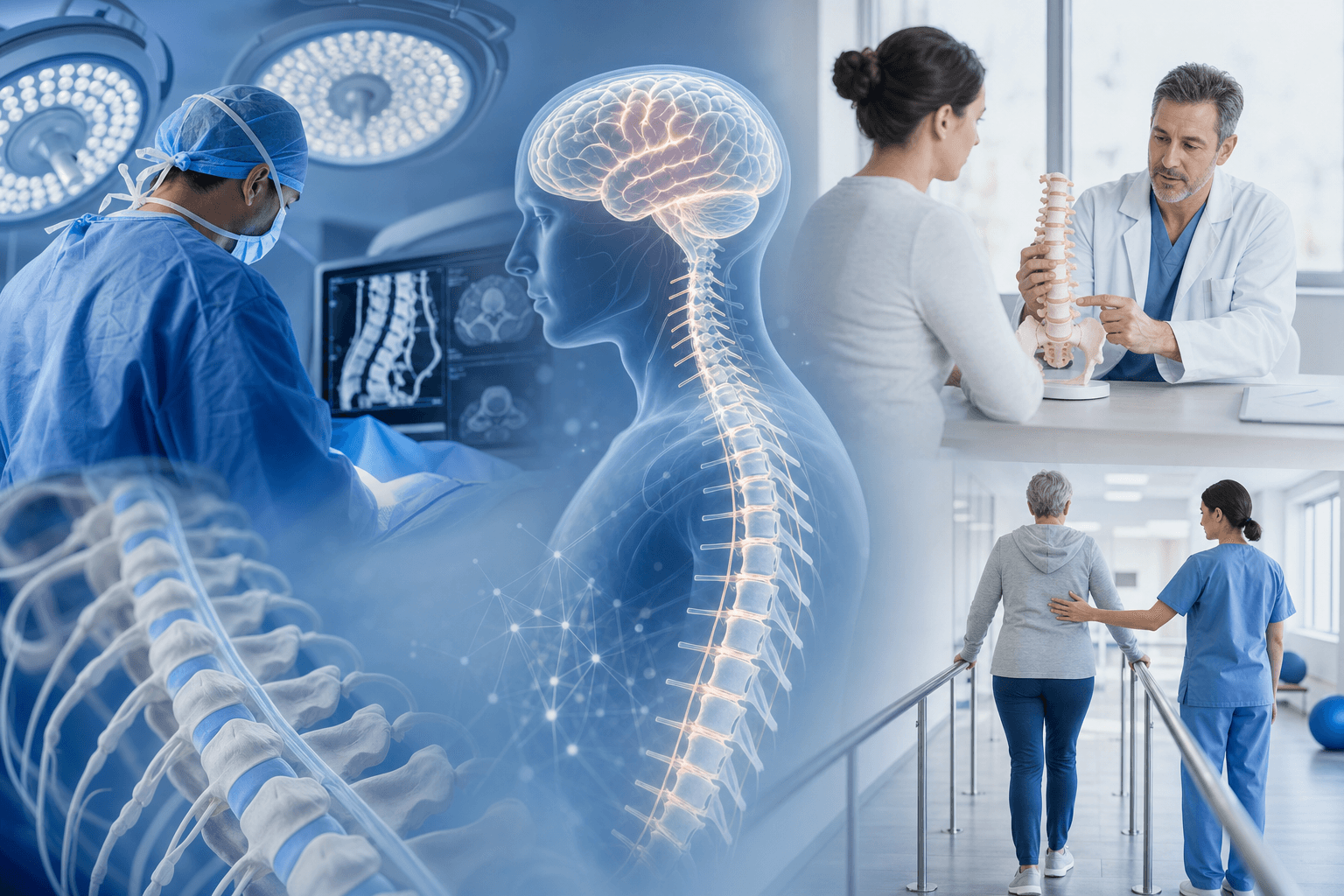
Being told you may need spine surgery can feel overwhelming. Many people imagine the worst and lose sleep over questions they have not yet had a chance to ask. The reassuring truth is that spine surgery today is well understood, carefully planned, and most patients return to comfortable, active lives. Understanding what happens before, during, and after the operation often removes a great deal of the fear.
Why spine surgery may be recommended
The spine is a column of bones (vertebrae) cushioned by soft discs and surrounded by nerves. Problems usually arise when something presses on a nerve or on the spinal cord, or when the spine becomes unstable. Common reasons for surgery include a slipped (herniated) disc, narrowing of the spinal canal (spinal stenosis), spondylolisthesis (one vertebra slipping over another), and injuries or wear that cause instability.
Typical symptoms that bring people to a specialist include persistent back or neck pain, pain that travels down an arm or leg (often called sciatica when it affects the leg), numbness, pins and needles, or weakness in a limb. Some people notice they trip more easily or have trouble gripping objects. Warning signs that need urgent attention are loss of bladder or bowel control, sudden severe weakness, or numbness around the groin area. If these happen, seek medical care immediately.
How problems are diagnosed
Diagnosis begins with a conversation and a physical examination. Your doctor will ask how the pain behaves, what makes it better or worse, and how it affects daily life. They will test your reflexes, strength, and sensation to locate where the nerve is being affected.
Imaging then confirms the picture. An MRI scan is the most useful tool for looking at discs, nerves, and the spinal cord, while a CT scan or plain X-rays give detailed views of the bones. Occasionally nerve conduction studies are used to measure how well signals are travelling. Importantly, scan findings are always interpreted alongside your symptoms. Many people have changes on a scan that cause no trouble at all, so surgery is never decided on an image alone.
Treatment is usually a journey, not a single step
Surgery is rarely the first option. Most spinal conditions improve with conservative (non-surgical) treatment, and your specialist will usually recommend trying these first unless there is a pressing reason not to.
Conservative measures include physiotherapy to strengthen the muscles that support the spine, pain-relieving and anti-inflammatory medication, activity modification, and sometimes targeted steroid injections to calm an irritated nerve. Staying gently active, rather than resting in bed, is often part of recovery.
Surgery becomes the right choice when symptoms are severe, when there is progressive weakness, or when good conservative treatment has not brought enough relief over a reasonable period. Common procedures include a microdiscectomy (removing the part of a disc pressing on a nerve), a laminectomy or decompression (creating more space for the nerves), and spinal fusion (joining vertebrae to provide stability). Many of these are now done through small incisions using minimally invasive techniques, which can mean less pain and a quicker recovery.
Preparing for your operation
Good preparation helps both your safety and your peace of mind. In the weeks before surgery you may have blood tests, a review of your medications, and a check of your general health. Tell your team about all medicines and supplements you take, as some (such as blood thinners) may need to be paused.
Simple steps make a real difference. If you smoke, stopping before surgery improves healing. Gentle exercise and good nutrition build your reserves. At home, prepare a comfortable space, place everyday items within easy reach, and arrange for someone to help during the first days back. Bring loose, comfortable clothing and a list of questions to your pre-admission appointment. Asking your surgeon what to expect for your specific procedure is always encouraged.
This article is general education and is not a substitute for personalised advice from your own doctor.
What recovery typically looks like
Recovery varies with the type of operation, but the overall pattern is encouraging. After many minimally invasive procedures, patients are walking the same day or the next day, and nursing staff will help you move safely. You may feel sore around the wound, and it is normal for some symptoms to settle gradually rather than instantly.
In the first few weeks, the focus is on gentle walking, protecting the wound, and avoiding heavy lifting, bending, or twisting. Your team will give you clear limits tailored to your surgery. Pain usually eases steadily, and many people reduce their pain medication week by week.
Physiotherapy is a key part of getting back to strength, and following the prescribed exercises makes a real difference to the final result. For a discectomy or decompression, many people return to light activities within a few weeks. Fusion surgery, where bone needs time to heal, often involves a longer and more gradual return over several months. Office work usually resumes sooner than physically demanding jobs.
Contact your team if you notice increasing redness or discharge from the wound, fever, worsening weakness, or any new loss of bladder or bowel control.
A calm takeaway
Spine surgery is a carefully considered step, taken only when it is likely to genuinely improve your life. With a clear diagnosis, sensible preparation, and steady rehabilitation, the great majority of patients experience meaningful relief and return to the activities they enjoy. Take it one day at a time, follow your team's guidance, and ask questions whenever you are unsure. You do not have to face the process alone, and your care team is there to support you at every stage.
Clear information is the first step in good brain and spine care. Explore the wider Medtech health ecosystem.